



Why Does My Steering Wheel Shake When I Brake?
 Service Advice from Coulter Buick GMC Phoenix
What that pulse in the wheel means, how to tell brake shake from suspension shake, and when it's time to have it looked at.
Quick Navigation
Quick Answer
If your steering wheel shakes when you brake, the most common causes are warped brake rotors or brake pads that have worn unevenly. If the shake shows up at low speeds before you ever touch the brake pedal, worn suspension parts such as bushings are the more likely source. Either way, a brake and suspension check at Coulter Buick GMC Phoenix can pinpoint the cause before a small fix turns into a bigger one.
Ever feel a pulse in the wheel the moment the brake pedal goes down? That's not nerves, it's the car trying to tell you something.
At Coulter Buick GMC Phoenix, service advisors hear about this a lot, especially after a summer of stop-and-go traffic across the Valley.
When the steering wheel shakes when braking, there's almost always a straightforward mechanical reason, and a fix that doesn't have to be complicated.
Key Takeaways
- A shaking steering wheel during braking usually points to warped rotors or unevenly worn brake pads.
- Vibration felt only when braking is different from shaking at low speeds, which often traces back to the suspension instead.
- Phoenix heat and heavy stop-and-go traffic can speed up rotor and pad wear.
- Ignoring the shake can lead to longer stopping distances and pricier repairs down the road.
- A quick inspection at Coulter Buick GMC Phoenix can pinpoint the cause before it gets worse.
Why Does My Steering Wheel Shake When I Brake?

In most cases, the answer to “Why does my steering wheel shake when I brake?” is uneven contact between the brake pads and rotors.
When a rotor's surface isn't perfectly flat, or the pads have worn unevenly, that inconsistency travels straight up through the steering column every time the brakes get applied.
Brake rotors are the flat metal discs the pads clamp onto with every stop. Under normal driving, they wear evenly and stay true.
Repeated hard stops, heat buildup, or long periods of sitting between drives can throw that surface out of round. That creates high and low spots that show up as pulsing at the pedal and shaking in the wheel.
Phoenix drivers see this more than most. Summer heat and frequent short trips put extra stress on the braking system, and vehicles that tow or spend a lot of time in traffic tend to wear rotors and pads faster than average.
None of this means something catastrophic is happening under the hood. It just means the braking system deserves a closer look.
Warped Brake Rotors
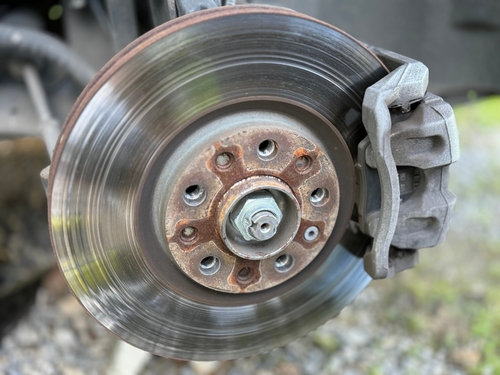
Warped, or “out of round,” rotors are the single most common cause of a steering wheel shaking under braking. Uneven heat buildup is usually to blame.
Every time the pads clamp down, friction turns motion into heat. Hard braking, long descents, or riding the brakes in traffic can heat one section of a rotor faster than the rest.
Repeated cycles of heating and cooling gradually warp the metal. Rotors are made thinner today than they used to be, which helps with weight but also makes them more prone to warping over time.
Once a rotor develops high spots, the pads can't keep even contact. That unevenness shows up as a rhythmic shake that gets more noticeable at higher speeds and heavier pedal pressure.
A technician can usually confirm it fast by measuring rotor thickness and runout.
Worn or Uneven Brake Pads
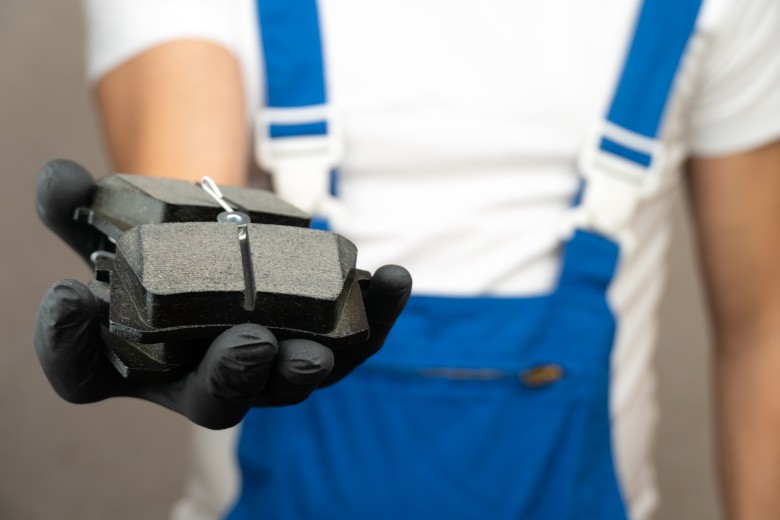
Thinning or unevenly worn brake pads can mimic the same shake as a warped rotor, since they lose their ability to grip the rotor's surface consistently.
Brake pads are built to wear down; that's their job, and replacing them periodically is a normal part of ownership. Problems start when they wear unevenly, whether from a sticking caliper, lower-quality material, or simple age.
Uneven pad material means one side of the rotor takes more pressure than the other during a stop. That produces a shake that can feel almost identical to a warped rotor.
Drivers often notice a few other clues at the same time, such as a vibrating brake pedal, a squeal or click, or the car pulling slightly to one side. A visual inspection usually settles the question quickly.
Why Does My Steering Wheel Shake at Low Speeds?

When "Why does my steering wheel shake at low speeds?" turns out to be the real question, meaning the shake shows up even before the brakes are touched, the suspension is usually the more likely culprit.
Suspension components like bushings, control arms, and tie rod ends keep the wheels steady and connected to the frame. When these parts wear out or loosen, the front end can develop a shimmy.
That shimmy shows up almost as soon as the car starts moving, not just when braking. Bushings in particular are easy to overlook, since they're not the first part most drivers think of.
Worn rubber bushings let metal components shift more than they should. A flashlight check can reveal cracked or frayed bushings, and gently moving suspension parts by hand can expose looseness that shouldn't be there.
This kind of vibration tends to feel steadier and less tied to pedal pressure than brake-related shaking, which helps narrow down the cause quickly.
Steering Wheel Shake Symptom Guide
This table helps sort out which type of shake points to which system:
Is It Safe to Keep Driving With a Shaking Steering Wheel?

Driving with a shaking steering wheel usually isn't an immediate emergency, but it isn't something to put off either. Both stopping power and steering control can be affected.
A shake means something in the braking or suspension system isn't working as it should. Problems in either area tend to worsen over time and mileage rather than resolve on their own.
Warped rotors can eventually lead to longer stopping distances, especially during an emergency stop. Worn suspension parts can affect handling and tire wear, turning what starts as a simple bushing replacement into a bigger repair if it's left unchecked.
Predictable, confident braking matters every time the vehicle's on the road, whether that's a quick errand across town or a longer drive out of Phoenix. Catching the issue early usually means a smaller, more affordable fix.
Getting to the Bottom of It
A shaking steering wheel is one of those symptoms that's easy to notice and, thankfully, usually easy to diagnose.
Whether the cause is a rotor, a pad, or a suspension component, catching it early keeps a small issue from becoming an expensive one.
Noticing a shake behind the wheel? Scheduling a quick brake and suspension check at Coulter Buick GMC Phoenix is an easy next step: better to catch it now than to let it linger.
FAQ